
Live With Nature
Sustainability
Practical land stewardship, careful use of materials and evidence-led learning from a real Mid Wales project.
Sustainability at Live With Nature
Care for land is a continuing practice, not a finished claim
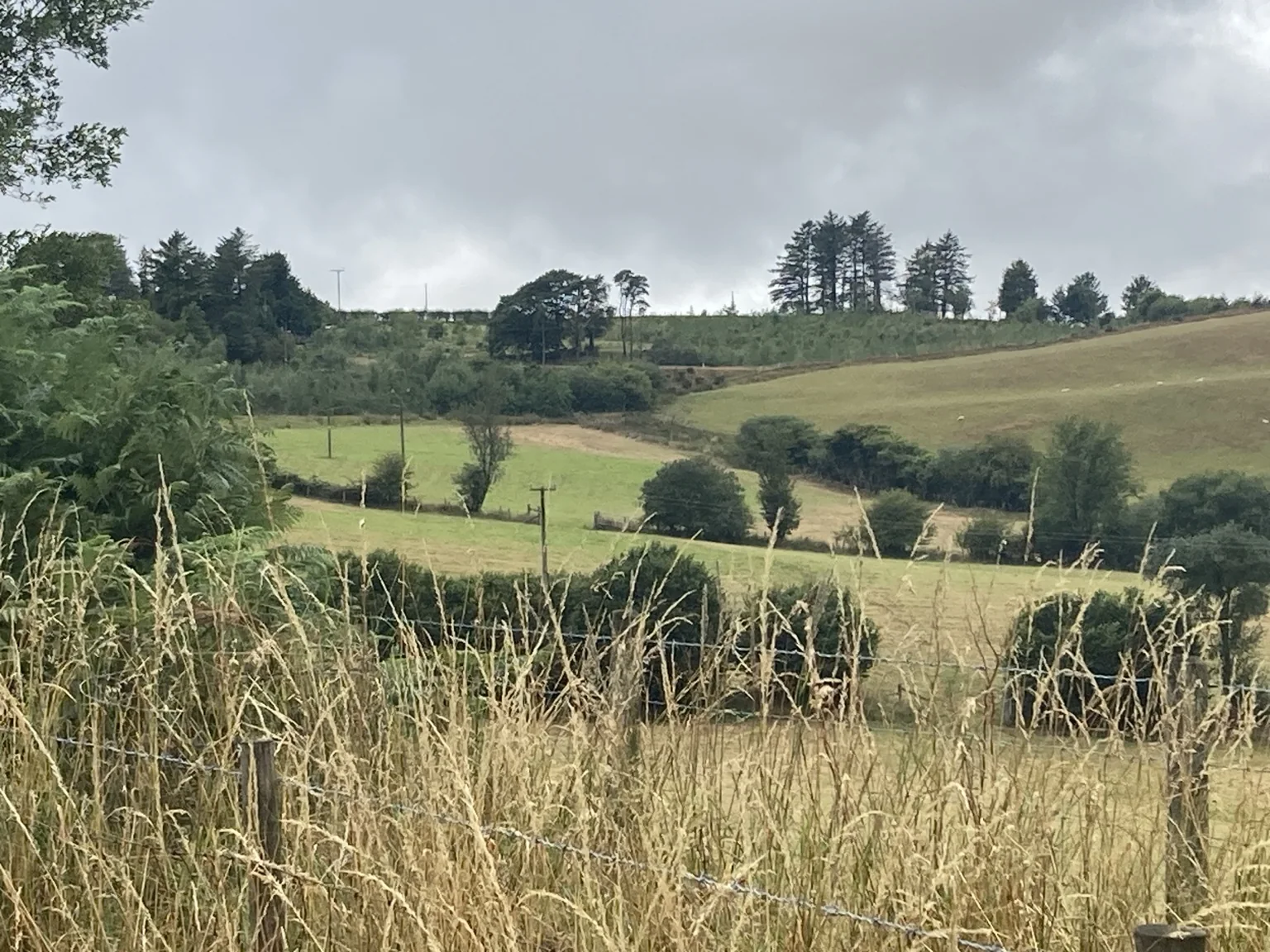
At Live With Nature, sustainability means paying attention to what a place can support, reducing avoidable waste and making decisions that improve resilience over time. The work is grounded in a real Mid Wales landscape, where wind, rain, wet ground, access, ageing trees and changing seasons all shape what is practical.
There is no single perfect intervention. Some areas need active management; others benefit from being left alone. The aim is to understand the difference, act carefully and keep learning from the result.
Working principles
Use less, retain more and intervene with purpose
Observe before acting
Water movement, wind exposure, soil condition, habitat, access and existing regeneration are considered before work begins.
Keep useful material on site
Branches, timber, leaf litter and woody debris can shelter wildlife, protect soil, slow water and return nutrients when they can be retained safely.
Diversify where we replant
Where replacement planting is needed, the aim is to move away from vulnerable single-species blocks and towards a more varied, site-appropriate mix.
Storm damage and woodland response
Not every fallen tree is waste
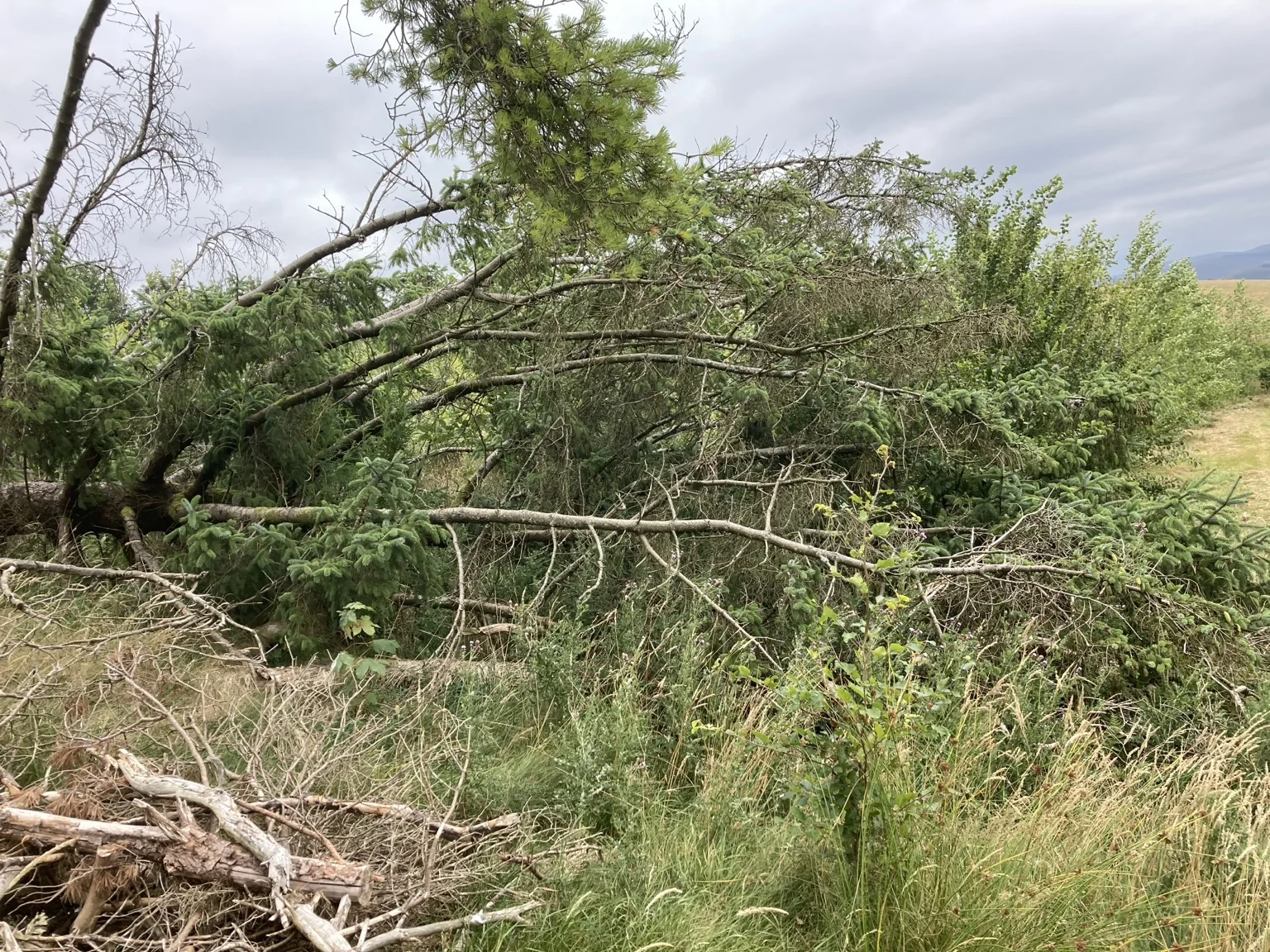
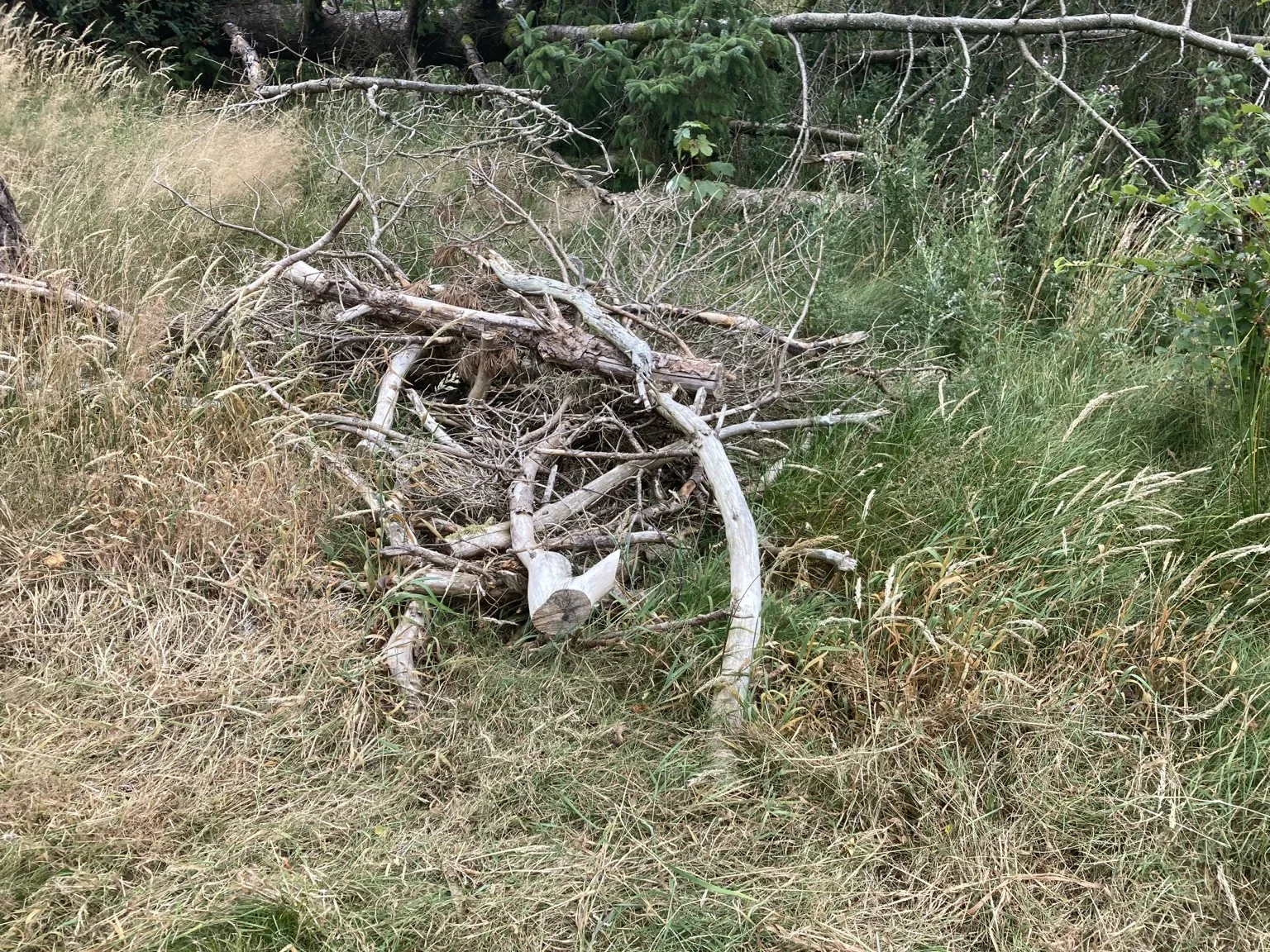
Storm damage can look destructive, but it also creates openings, deadwood, shelter and new ecological edges. Where fallen or damaged material is not a safety or access problem, parts of it are retained as habitat rather than cleared simply for tidiness.
Large limbs and smaller branches are grouped where appropriate to form coarse woody habitat. Standing stems may be shortened and retained when safe. Timber that must be removed can be processed for practical use, while the remaining material continues to support fungi, invertebrates, birds and small mammals.
Replanting for resilience
Replace losses with greater diversity
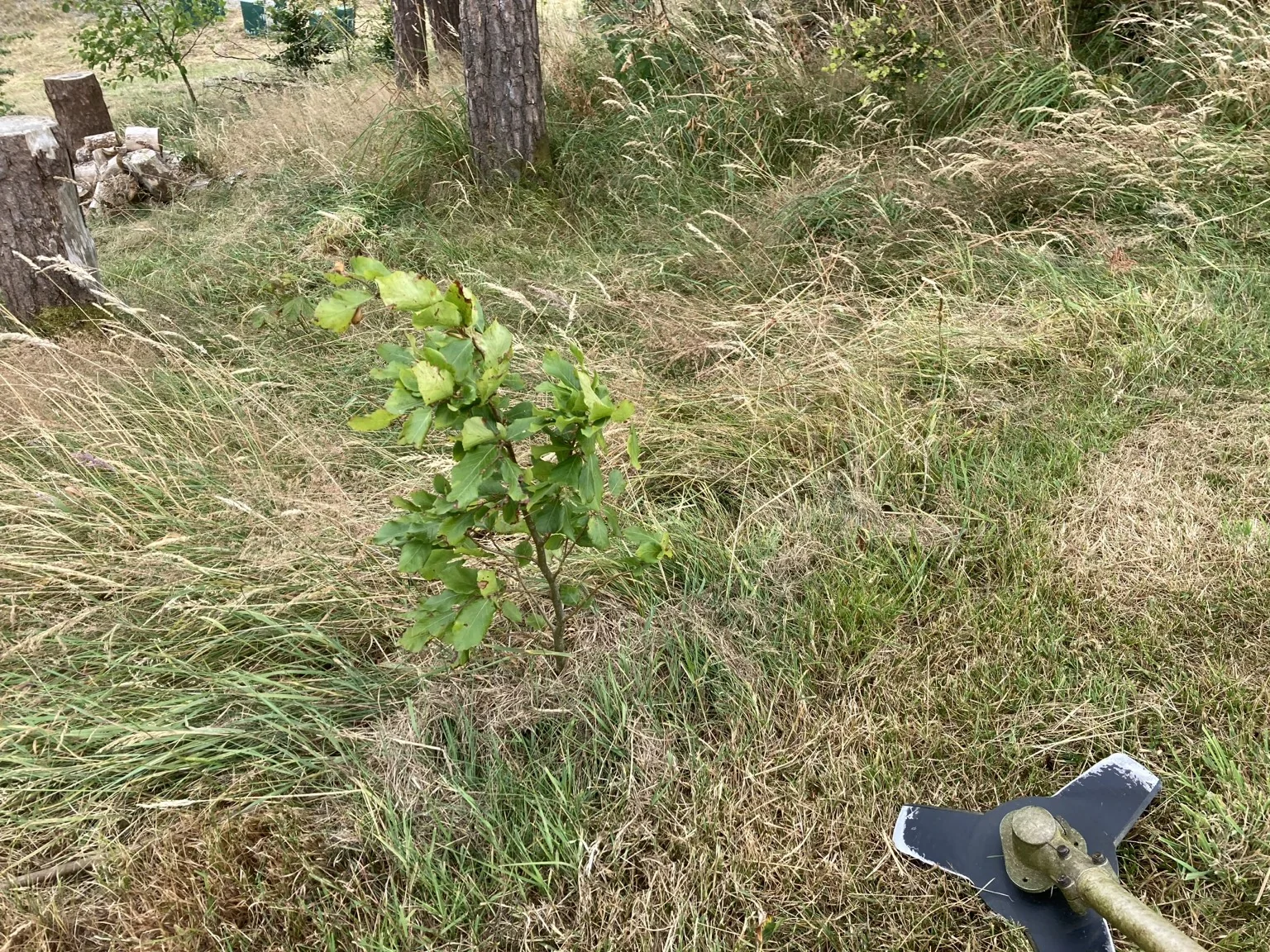
Where natural regeneration is unlikely to provide the right mix, new trees are planted and maintained. Replacement does not mean recreating the same pattern that was lost. Species choice is widened to reduce dependence on a single crop and to create a more varied structure over time.
The practical work includes protecting young trees from competing growth, checking survival, replacing failures and adapting choices to the conditions actually observed on the site.
Connected systems
Woodland, water, soil, food and energy belong to the same story
Soil and water
Vegetation cover, roots and woody material help reduce erosion, slow runoff and protect wet or exposed ground.
Food and growing
Growing systems are developed around the realities of the climate, with attention to shelter, soil improvement, perennial planting and manageable inputs.
Responsible Firewood
Firewood is treated as a measured local material: moisture, processing, storage, volume and delivery all matter more than vague labels.
Evidence over perfection
Show the work, including the difficult parts
Sustainability claims are strongest when they can be connected to real decisions, photographs, measurements and outcomes. Live With Nature will continue to document what changes, what survives, what fails and what needs a different approach.