


Permaculture design and system design specialist – After a long and varied career spanning education, construction, IT and technology, broadcasting, infrastructure, electronics, media, public relations, and creative design, I found myself drawn back to a simpler question: how do we design systems that actually work with life, not against it?
Across these industries, a common thread emerged—systems thinking.
That common thread—systems thinking can be woven into many things.
I learned that systems design isn’t just a technical discipline. It’s a way of seeing. It’s the ability to notice relationships, feedback loops, bottlenecks, and hidden dependencies. That common thread—systems thinking—can be woven into many things. It can shape how we build organisations, manage workflows, structure data, design infrastructure, and communicate ideas. Over time, I became less interested in individual tools and more interested in how the parts interact. The question was never “What is the best component?” but “How do these components behave together under real conditions?”
Whether building digital platforms, managing complex infrastructure, designing creative workflows, or developing technical solutions, my work consistently focused on how individual elements interact to form resilient, efficient, and adaptable systems. In IT and tech, that meant designing for uptime, clarity, and maintainability. In construction and infrastructure, it meant thinking in terms of flows—materials, water, access, safety, and long-term wear. In media and broadcasting, it meant designing processes that could perform under pressure, with minimal failure points. Over time, I realised the underlying logic was the same. Strong systems design is about making the right things easy, and the wrong things difficult, without needing constant intervention.
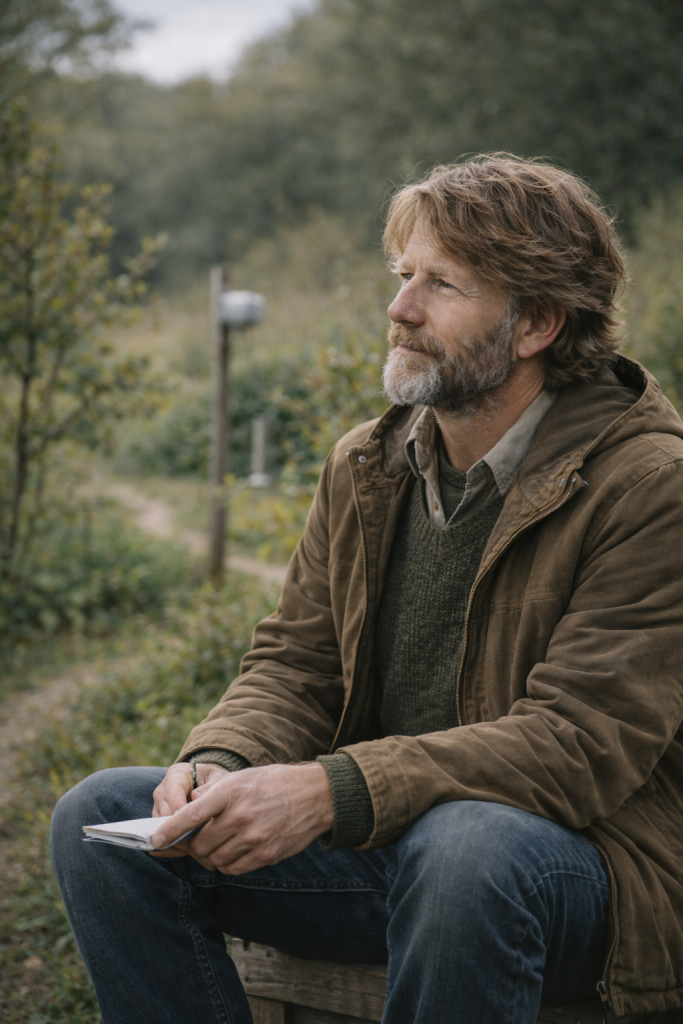
Permaculture brought those ideas home to the land. The first time I encountered permaculture design as a complete framework, it felt familiar in the best possible way. Permaculture design is systems design applied to living ecosystems. It’s not just gardening, and it’s not just theory. It’s permaculture system design: placing elements so they support each other, stacking functions, reducing waste, and building resilience through diversity. The language was different, but the principles were instantly recognisable—observe first, design with feedback, and plan for long time horizons.
Today, I apply that cross-disciplinary experience to the design of regenerative landscapes and supporting systems. My work centres on permaculture design, permaculture system design, and broader systems design thinking that connects land stewardship with practical tools. On the land side, that includes soil-building strategies, water harvesting, microclimate awareness, access planning, and planting systems that prioritise biodiversity and resilience. On the support side, it includes monitoring, automation, and low-energy infrastructure—carefully chosen and deliberately simple—so that the system remains understandable, repairable, and robust.
A key part of my approach is reducing labour without reducing relationship. Permaculture is not about controlling nature; it’s about cooperating with it. That means using tools, data, and automation in service of natural processes, not as a replacement for observation and care. Feedback loops matter. If a garden or landscape can “tell you” what it needs through clear signals—soil moisture patterns, plant health, seasonal behaviour—then the response can be calm and timely rather than reactive and exhausting. In that sense, good permaculture system design is also good human design: it supports wellbeing, consistency, and long-term participation.
I try to keep everything grounded and practical. The goal is not complexity for its own sake, or technology added as decoration. The goal is elegant, supportive systems that make permaculture more accessible, scalable, and sustainable over time. That could mean a simpler water-harvesting layout that reduces erosion and keeps soil hydrated longer. It could mean a planting strategy built around companion planting and succession, so fertility increases naturally. It could mean a monitoring approach that helps avoid guesswork and improves decision-making without turning the land into a laboratory.
Ultimately, I see permaculture design as a bridge between ecology and everyday life. It offers a way to build systems that get better with time—systems that restore soil, support biodiversity, and produce real value without constant extraction. My background across multiple industries gave me a toolkit for systems design in many forms. Permaculture gave that toolkit a purpose: to build resilient, regenerative systems that work with nature, and help other people do the same.