About Me
I believe good communication should feel natural, honest, and grounded—much like permaculture itself. At its best, communication isn’t about broadcasting or persuading; it’s about paying attention. It starts with listening, noticing patterns, and understanding what already exists before trying to shape anything new. That mindset guides everything I do in my role.
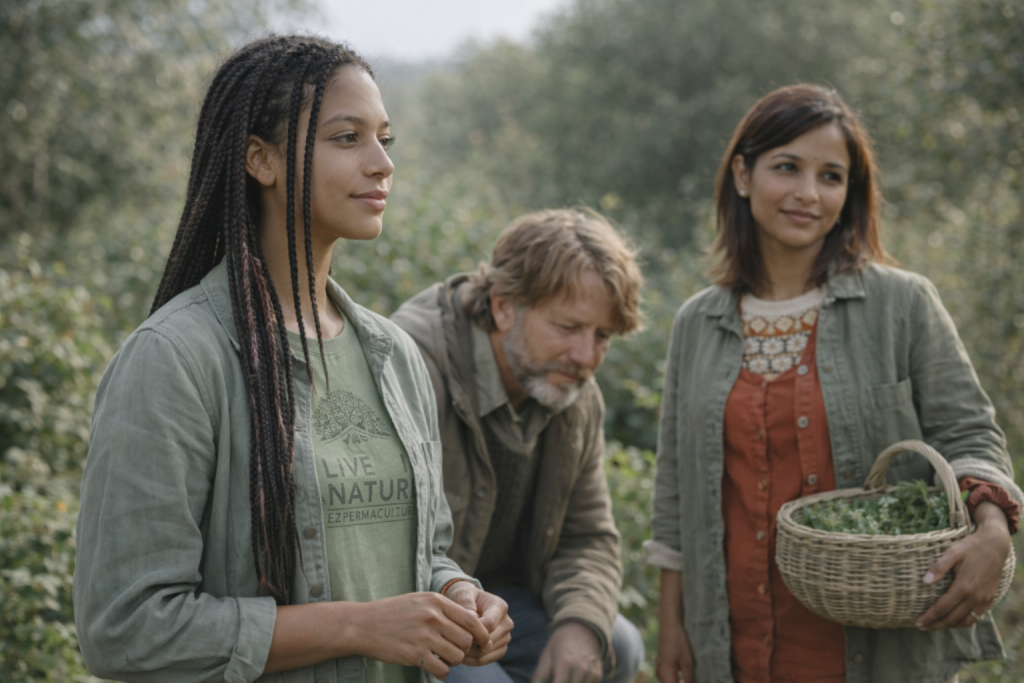
My work is rooted in observing first. I take time to understand the people involved, the land they’re connected to, and the intentions behind the projects we share. Just as permaculture design begins with careful observation, meaningful communication grows from awareness and respect. When you slow down enough to really see what’s happening, the story tends to reveal itself without being forced.
I’m especially drawn to the human side of permaculture. The quiet wins rarely make headlines, but they matter. The first time someone notices improved soil structure, the moment a community garden starts to feel like a meeting place rather than a project, the slow confidence that builds when people realise they can work with nature rather than against it—those moments are where the real story lives. I care deeply about capturing and sharing that side of the work.
One of the things I enjoy most is translating complex ideas into simple, relatable messages. Permaculture can sometimes feel overwhelming from the outside, filled with unfamiliar terms or big concepts. I like breaking those ideas down into everyday language that feels accessible rather than intimidating. My aim is always to help people feel included, curious, and capable—never talked down to or “marketed at.”
Creating welcoming spaces is central to how I approach communication. Whether that’s through social media, written content, or in-person interactions, I want people to feel invited rather than sold to. Permaculture is about relationships—between people, plants, soil, and systems—and communication should reflect that same sense of connection and care. If something feels forced or overly polished, it usually means the message has drifted away from its roots.
I also believe authenticity does a lot of the heavy lifting. You don’t need to exaggerate or over-explain when the work speaks for itself. Honest storytelling, shared at a human pace, tends to resonate far more than perfectly packaged messages. I try to let the real textures of life—successes, experiments, learning curves, and all—come through naturally.
Outside of my work, music plays a big role in my life. Give me a bit of sunshine and I’m perfectly happy with a ukulele in hand, singing, dancing, and turning ordinary moments into small celebrations. It’s playful, expressive, and definitely carries strong Gen Z energy—no apology there. Music keeps me grounded and reminds me that joy doesn’t need a reason or a schedule.
When I’m not making noise, I’m usually outdoors. I love observing how nature solves problems without drama or excess. Plants adapt, ecosystems balance themselves, and nothing rushes unnecessarily. Spending time in those spaces reinforces a mindset I bring back into my work: use what’s already there, don’t over-complicate things, and trust processes that unfold over time.
That perspective shapes how I approach both communication and life more broadly. I’m interested in steady progress rather than quick wins, in relationships rather than reach, and in depth rather than noise. Working with nature teaches patience, humility, and respect—qualities that feel increasingly important in a world that often moves too fast.
At the heart of everything I do is a simple intention: to reflect the values behind the work honestly and thoughtfully. By listening carefully, staying curious, and keeping things real, I aim to support communication that feels alive, human, and genuinely connected to the land and communities it represents.